Voice agents for calls
AI voice agents that answer, qualify, book and transfer. Each call follows defined steps, pulls facts from your systems and hands over to a person, with full context, at the moments it should.

Industries
Arcforth is an AI automation agency for businesses whose customers call, chat and wait for a follow-up. We build AI voice agents, web chat, multi-channel follow-up and CRM sync as working software around the workflow you already run, with human review and escalation designed in from the first release. We write and ship the product ourselves; we do not resell no-code templates.
Get a Free Product MapAI voice agents that answer, qualify, book and transfer. Each call follows defined steps, pulls facts from your systems and hands over to a person, with full context, at the moments it should.
Web chat and messaging that carry the same context as the call. Follow-up runs on rules your team can read: what is sent, on which channel, after which event and when a person takes over.
Every conversation writes structured, validated data back to the CRM: contact details, qualification fields, notes and next steps. Reps see what happened without retyping a transcript.
An AI automation agency should leave you with software that does a defined job every day: answering calls, qualifying enquiries, following up, updating records and passing the right cases to people. The useful question to ask any agency is not which tools they use but which workflow they will own end to end, and how you will know it is working.
Arcforth builds automation as a product, not as a stack of connected templates. A typical engagement covers:
Where an existing service is the right call, such as a telephony provider or a speech engine, we use it. The workflow logic, data model and integrations are built around your business, so they can change when your process does.
A voice agent is the least forgiving AI interface. Callers interrupt, change their minds, talk over background noise and hang up if the pause is too long. Most of AI voice agent development is about the parts around the model:
Voice rarely works alone. A lead that starts on a call and continues in chat should be treated as one conversation, which is why we build voice, chat and follow-up on a shared customer record.
Many leads are lost in the gap between the first contact and the second. Automated chat and follow-up close that gap only if they share context: the chat assistant should know about the call, and the follow-up message should reflect what was actually said.
We build that shared context as one record per customer, updated by every channel. Follow-up rules stay readable and editable by your team, for example: send a booking link by message ten minutes after a qualified call that did not book. They do not live hidden inside a prompt.
CRM sync is where many automations quietly fail. Every write is validated against a schema, retried safely if the CRM is slow and logged so a rep can see what changed. If the model cannot fill a required field with confidence, the record is flagged for a person instead of guessed.
Good automation knows when to stop. We agree escalation rules with your team before launch, and they usually cover four triggers:
At each boundary the person receives the full context: the transcript, the extracted details, what the automation already did and what it recommends. Supervisors can watch live conversations and step in. On JoinClan, AI turns short weekly voice conversations into draft LinkedIn and X content, and editors shape it before it goes out: the same review pattern, applied to content instead of calls.
Our write-up on agentic AI workflows goes deeper into approval steps, validated tool calls and keeping the workflow's state in code.
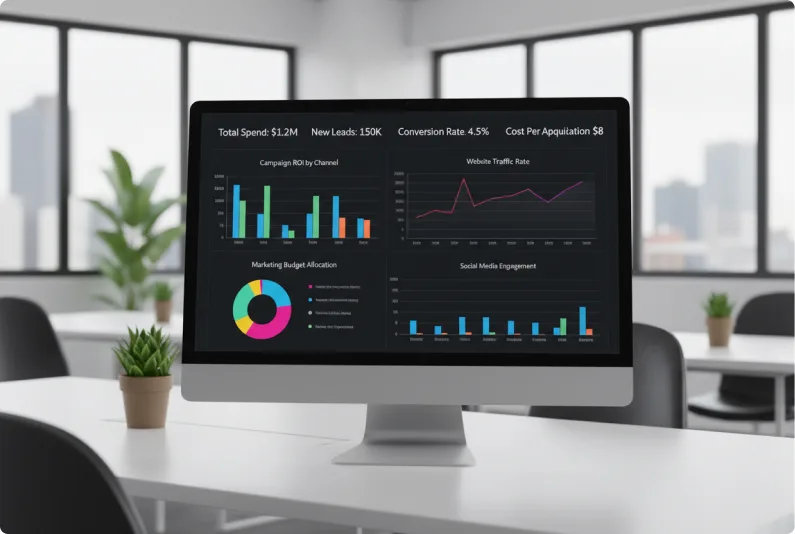
An AI workflow automation company should be able to tell you, every week, whether the automation is doing its job. We agree the measures before the build and put them on a dashboard from launch:
Before any change ships, it runs against an evaluation set built from real conversations. Our guide to evaluating LLM features before shipping explains how we build that set and what a release gate looks like.
Skalix AI is the clearest example of how we work as an AI automation agency. It is an AI-native revenue platform with AI voice agents, web chat, multi-channel follow-up, CRM sync and human handoff, and it went from build to launch in 4 weeks.
The patterns on this page come from that build: defined conversation flows instead of free-form generation, facts pulled from business systems rather than from the model, one customer record across channels, a live console for supervisors and transfer to a rep when a conversation needs one.
If you want to launch a new automation product rather than automate your own operations, our AI product development services cover that path, and our guide on how to build an AI MVP walks through the architecture. Teams that want engineers inside their own systems can work with our forward deployed engineers.
Template stacks are a reasonable way to test an idea. They get harder to trust as volume, channels and edge cases grow.
| Compared | Built by Arcforth | Resold no-code template |
|---|---|---|
| Workflow logic | Defined in code around your process and rules | Fixed by the template and adapted with workarounds |
| Integrations | Validated writes, safe retries and logs for each system | Connectors that can fail quietly when a field changes |
| Human review | Escalation rules, approval queues and live handoff designed in | Often an email alert, added later |
| Measurement | Completion, handoffs, errors and cost per task from launch | Run counts and raw logs |
| Changes over time | An evaluation set checks every change before release | Edits tested by hand, if at all |
| Cost at volume | A budget per task, with smaller models where they do the job | Platform fees per run or step that compound with volume |
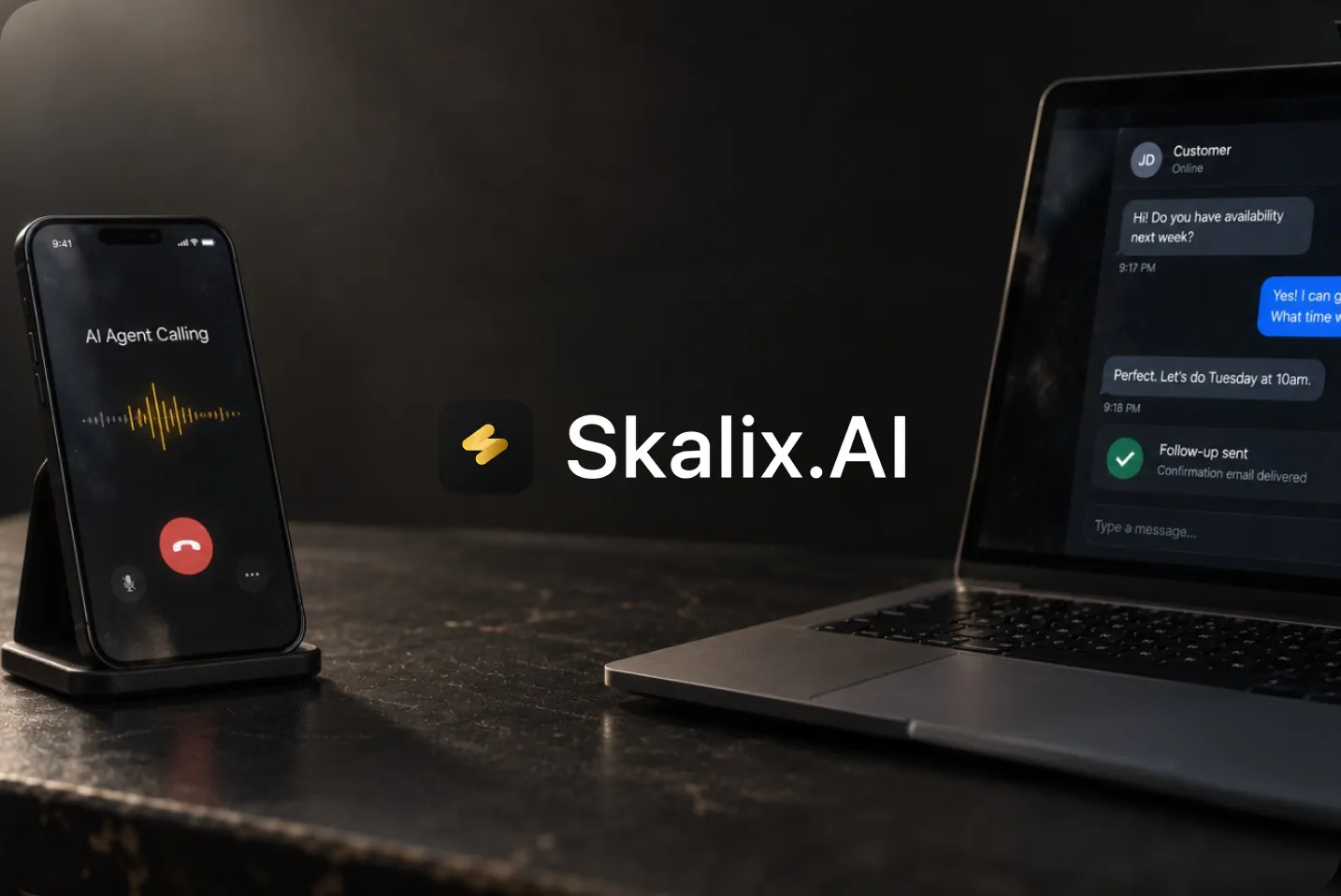
An AI-native revenue platform for calls, chat and customer follow-up.
View Skalix AI Case Study
Short weekly conversations turned into consistent, editor-shaped content.
View JoinClan Case StudyChoose one customer or operational workflow, map its channels and handoffs, and agree how success is measured.
Prototype the call or chat flow with real inputs, edge cases and the escalation rules.
Build voice, chat or follow-up flows with CRM sync, validated actions and review controls.
Launch, then review completed tasks, handoffs, errors and cost per task every week.
A Product Pilot ($1,499 once) focuses on one workflow, core flows and prototype, build-ready requirements and an MVP roadmap. A Product Squad ($3,490 per month) supports ongoing product direction, design, engineering and iteration. An Embedded Product Unit (from $5,000 per month) adds capacity for larger products and multiple workstreams.
An AI automation agency designs and builds software that handles a repeated business workflow with AI, such as answering calls, qualifying leads, following up and updating the CRM. At Arcforth that means a working product with defined steps, integrations, human escalation and measurement, not a set of connected templates.
Yes. Voice agents are a core part of our automation work. Skalix AI, which we took from build to launch in 4 weeks, combines AI voice agents with web chat, multi-channel follow-up, CRM sync and handoff to people.
No. We write the workflow logic, data model and integrations as software built for your business. We use proven services where they make sense, such as telephony or speech providers, but we do not resell or rebrand no-code templates.
When the customer asks for one, when the request falls outside the defined workflow or confidence is low, when the topic is sensitive, or when the action is high-value or cannot be undone. The person receives the transcript, the extracted details and the automation's recommendation.
We track coverage and time to first response, completed tasks such as meetings booked or leads qualified, handoff rate and reasons, error and correction rate, and latency and cost per completed task. Every change also runs against an evaluation set built from real conversations before release.
CRMs, calendars, messaging channels, helpdesks and internal databases, as long as there is an API or a reliable export. We confirm access and permissions during the Define step, before any action is automated.
Bring examples of one repeated workflow and the systems it touches. A Product Pilot ($1,499 once) maps the flow, prototypes it and produces build-ready requirements. You can also request a free clickable prototype, delivered within 48 hours once the scope is agreed.

If you have committed to a software venture and need a team to shape, build and keep improving it, start with a product conversation.
Human judgment. AI-native delivery. One team accountable from the first decision to every release.