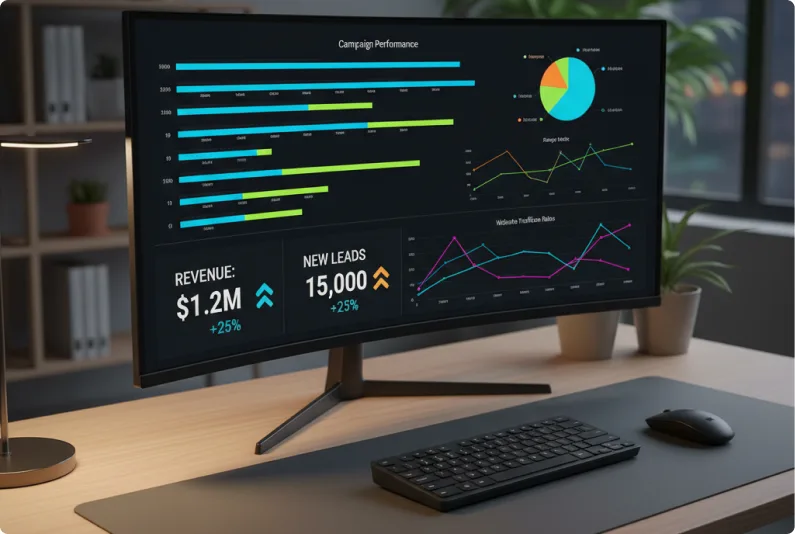
Build complete product workflows
Connect the interface to authentication, business rules and data. Plan for the states around the happy path: access restrictions, retries, empty screens and half-finished work.

Services
Arcforth is a software product development company for founders and industry experts who need more than code. One senior squad turns your product direction into working web and mobile software, with the back end, integrations, data and QA planned as a single release. That is what we mean by software product engineering, and it is how CollectiveSpend, Mesmeride and Viewings reached their users.
Get a Free Product MapConnect the interface to authentication, business rules and data. Plan for the states around the happy path: access restrictions, retries, empty screens and half-finished work.
Map what each external service and existing system is responsible for. Define how data moves, how failures surface and which actions need a person to review them.
Treat testing, deployment and monitoring as part of the build, not a phase after it. Agree acceptance criteria and review working increments before widening the release.
A software product development company designs, builds and runs software that is itself the product: the thing your customers log into, pay for and judge you by. That is different from a project shop that delivers a website or an internal tool and walks away. A product has users on day one, a roadmap after launch, and releases that never really stop.
So the useful question is not whether a team can write code. It is whether they can take an industry problem, decide what the first release must do, build every layer it touches, and keep it working once real people depend on it. Our short version: you know the industry, we build what it's missing.
At Arcforth that work sits with one cross-functional squad covering product strategy, UX, full-stack engineering and QA. The people who agree the scope with you are the ones who ship it, test it and watch it in production, which removes most of the handoffs where requirements usually get lost.
Most products fail at the seams between layers, not inside one of them. A sign-up screen works until it meets a real permission model; an integration works until the other system times out. Software product engineering means planning those layers together:
Quality is not a phase at the end of the build. Each workflow starts with acceptance criteria that you sign off: what a user can do, what they must not be able to do, and what the system does when something upstream fails. Code review and automated checks run on every change, and the person testing a feature was involved when it was specified.
Release practice matters just as much. Small changes, a pipeline the team trusts and feature flags let us put code into production before it is switched on for everyone. We explain the setup in continuous delivery for startups, and the database side, where many outages actually start, in zero downtime database migrations.
After each release we watch the workflow itself, not only server health. Did bookings complete? Did approvals route to the right person? Did payments reconcile? Fixes and follow-ups go back into the next cycle with you.
Choosing an outsourced software product development company is mostly a question of where decisions and risk sit. Portfolios look alike; operating models do not. Before you sign, ask:
If a team cannot answer these crisply, the cheapest quote will not stay cheap for long.
A body shop, or staff augmentation firm, sells hours and headcount. You get developers; you manage them, decide what they build and own the outcome. That can work if you already have a strong product lead and engineering manager. For a founder without them, it moves every hard decision back onto your desk.
| Question | Body shop | Arcforth |
|---|---|---|
| What you buy | Developer hours | A squad accountable for working releases |
| Who manages the work | You | The squad, with you approving priorities |
| Product and UX decisions | Yours to make and document | Proposed, tested and written down by the squad |
| QA | Often an extra role you have to request | Part of every release |
| Knowledge when people change | Leaves with the individual | Kept in shared decisions, docs and tests |
The difference shows up in the second month, when the first plan meets real users. A team that owns the outcome changes the plan with you. A team that sells hours waits for new tickets.
Three products we built show the range. CollectiveSpend is a procurement platform covering sourcing, multi-supplier RFQs, purchase orders and approvals, with AED pricing and local suppliers for its UAE enterprise users. More than $3B in spend is managed through it, so approval rules and audit trails had to be exactly right, not roughly right.
Mesmeride is an event operating system for registration, ticketing, attendee engagement and event operations, and more than 28K attendees have run through it. Event software faces an unforgiving test: the check-in line at the door on the day.
Viewings is a New Zealand rental platform that connects property search, viewing bookings, tenant applications, digital agreements and listing management for agents and landlords. The hard part there was coordination: several parties, shared calendars and documents that have to stay in step.
If you are starting from an idea, begin smaller than a full build. As an MVP development company, we typically plan first releases as fixed-scope builds of about four weeks, and our MVP development process explains how that scope gets set. Our fastest first release so far took three weeks.
If the product is live and needs steady progress, a dedicated product squad keeps product, design, engineering and QA moving on one roadmap. If your own team needs senior engineers working inside it, look at our forward deployed engineers.
Not sure yet? Request a free clickable prototype. We review the request, agree the scope with you and deliver it within 48 hours, which is often enough to see whether the idea holds together.
A tailored procurement platform spanning sourcing, RFQs and purchase orders.
View CollectiveSpend Case Study
Registration, ticketing, attendee engagement and event operations in one platform.
View Mesmeride Case Study
Simpler journeys for property discovery, viewings, applications and agreements.
View Viewings Case StudyEstablish the first-release scope, dependencies and acceptance criteria.
Check uncertain integrations and technical assumptions before the main build.
Engineer and test the product through short approval cycles.
Release, observe the workflow and prioritize fixes with the product team.
A Product Pilot ($1,499 once) focuses on one workflow, core flows and prototype, build-ready requirements and an MVP roadmap. A Product Squad ($3,490 per month) supports ongoing product direction, design, engineering and iteration. An Embedded Product Unit (from $5,000 per month) adds capacity for larger products and multiple workstreams.
It designs, builds and maintains software that is the product itself, the thing customers use and pay for. At Arcforth that means one squad covering product strategy, UX, web and mobile engineering, back end, integrations, data and QA, through launch and the releases after it.
Yes. We begin with a review of the current system and the changes you want. The review informs the delivery scope, integration risks and practical next steps before any new work is committed.
Web and mobile engineering are both available. The right platform and scope depend on where users do the work and what the first release needs to support.
Each workflow has acceptance criteria agreed before it is built. Code review, automated tests on the critical paths and a release review are part of every cycle, and the specific checks are agreed around your workflows and integrations.
MVPs are typically planned as fixed-scope four-week builds, and our fastest first release took three weeks. Larger products are planned as a sequence of releases, each with its own acceptance criteria.
Staff augmentation gives you developers to manage. Arcforth gives you a squad that owns product decisions, design, engineering and QA for each release, with you approving the priorities.
Request a free clickable prototype, delivered within 48 hours once the scope is agreed, or start with a Product Pilot at $1,499 to define the workflow, prototype and build-ready requirements before the full build is scoped.

If you have committed to a software venture and need a team to shape, build and keep improving it, start with a product conversation.
Human judgment. AI-native delivery. One team accountable from the first decision to every release.