Replace a manual release routine
Build from a known commit and deploy an identified artifact with reviewed configuration and access.

Services
Arcforth’s DevOps consulting services help product teams replace fragile manual releases with a repeatable CI/CD process. We connect repository checks, deployment configuration, database compatibility and customer-task verification so the next engineer can release with evidence.
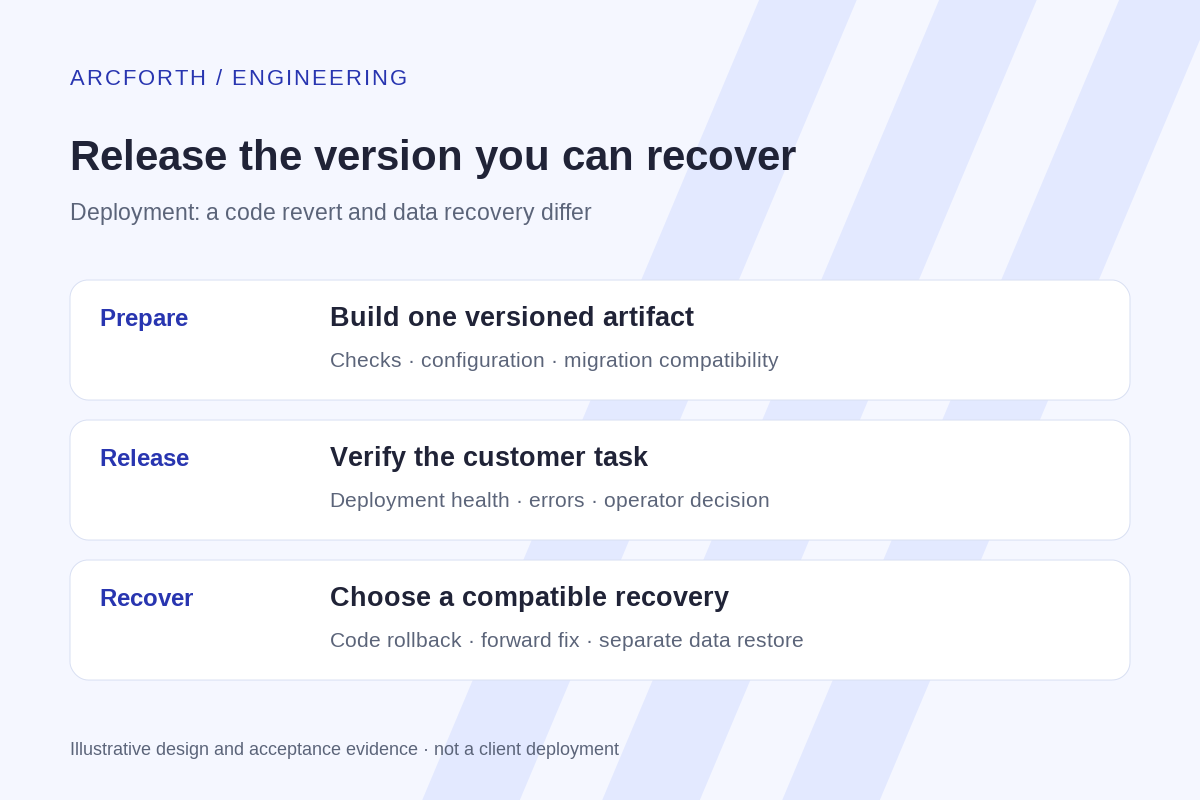
Build from a known commit and deploy an identified artifact with reviewed configuration and access.
Plan compatibility between old and new application versions, migration steps and a forward recovery route.
Rehearse release and failure handling without depending on one developer’s laptop or account.
Start with a release map: repository, required checks, build artifact, environment configuration, deployment target and the person authorised to promote it. Identify where a manual step changes the result or hides an error. We can work in the existing pipeline before proposing a platform replacement.
The deliverable is an agreed release route with inspectable evidence: commit, artifact, checks, migration status, deployment result and customer-task verification. Pipeline success is one signal; the accepted user journey is another.
A failed interface release may be recoverable by deploying the previous compatible build. A release that has changed stored data, sent emails or created external orders needs a different decision. Do not automatically reset a shared branch or restore an old database just because the application reports an error.
Use expand-and-contract migration planning where appropriate: introduce a compatible change, deploy the transition, backfill with evidence and remove old behaviour only after the supported versions no longer depend on it. Agree the exact migration and recovery method for your database and workload. AWS change-enablement guidance describes staged releases, operational signals and recovery testing.
Consider a fictional product adding a delivery-status field to an existing order record. A useful release plan first introduces a compatible database change. The current application must still read an order after that change. The candidate version then writes the new field, while an older worker can continue processing supported records. A later cleanup removes obsolete behaviour only after the team confirms that supported versions no longer depend on it.
The release record links the migration, application artifact and worker version to representative fixtures. One fixture contains an older order without the new value; another covers an order written by the candidate application. A smoke check verifies the complete customer confirmation rather than only a responding process. The test result identifies what was actually exercised and whether a provider was simulated. These examples are proposed acceptance evidence, not a promise that a particular deployment will have no interruption.
If the candidate fails, the operator checks whether the previous build remains compatible with current records before selecting it. If compatibility is unresolved, the decision may be a forward repair or a controlled maintenance step. Restoring data requires a separate impact review. Our migration planning guide develops that boundary, and shipping without breaking production connects smaller changes with reviewable release evidence.
DevOps consulting services should produce a release map, agreed checks, configuration references, recovery decision and runbook that your own team can use. Record which responsibilities remain with a platform provider or internal technical owner. The cloud readiness checklist helps inspect the runtime and state dependencies behind the pipeline before deployment automation is accepted.
| Rehearsal | Evidence required |
|---|---|
| A required check fails | Release is blocked before production promotion |
| New code cannot read an existing record | Compatibility failure is caught in a representative fixture |
| The release starts but order confirmation fails | Customer-task signal triggers an operator decision |
| Previous build is selected | Current schema compatibility is checked before recovery |
| A worker retries after a timeout | External effects are reconciled before another attempt |
These are proposed acceptance cases, not claimed client incident results. Run them in the agreed safe environment and record the version, configuration reference and operator decision.
Work can include required checks, build reproducibility, environment separation, restricted deployment roles, secret references, preview verification, artifact promotion and release annotations. We define what a health check proves and add a customer-task smoke check where it is safe. Real payments, customer messages and destructive operations need an approved testing boundary.
Release monitoring should separate application errors, dependency failures and queue backlog. A rollback threshold must have a named owner and a known compatible target. Support hours, incident response and provider charges are explicit proposal items rather than assumed consequences of CI/CD setup.
An authorised incoming engineer should build, deploy and inspect the runbook using their own permitted access. Record unresolved dependencies, account recovery owners, scheduled jobs and the steps that remain manual. Use the software handover rehearsal and deployment recovery worksheet as evidence registers.
For US, UK, Dubai/UAE, European and Australian teams, agree release windows and escalation across the actual time zones. Keep risky migrations out of an unsupported window unless the business explicitly accepts that operating plan.
If the current runtime and data services are the problem, start with cloud infrastructure services. If a model dependency, retrieval boundary or evaluation gate is missing, use AI infrastructure services. The linked product case studies show related application work; they do not establish a particular deployment architecture for your systems.
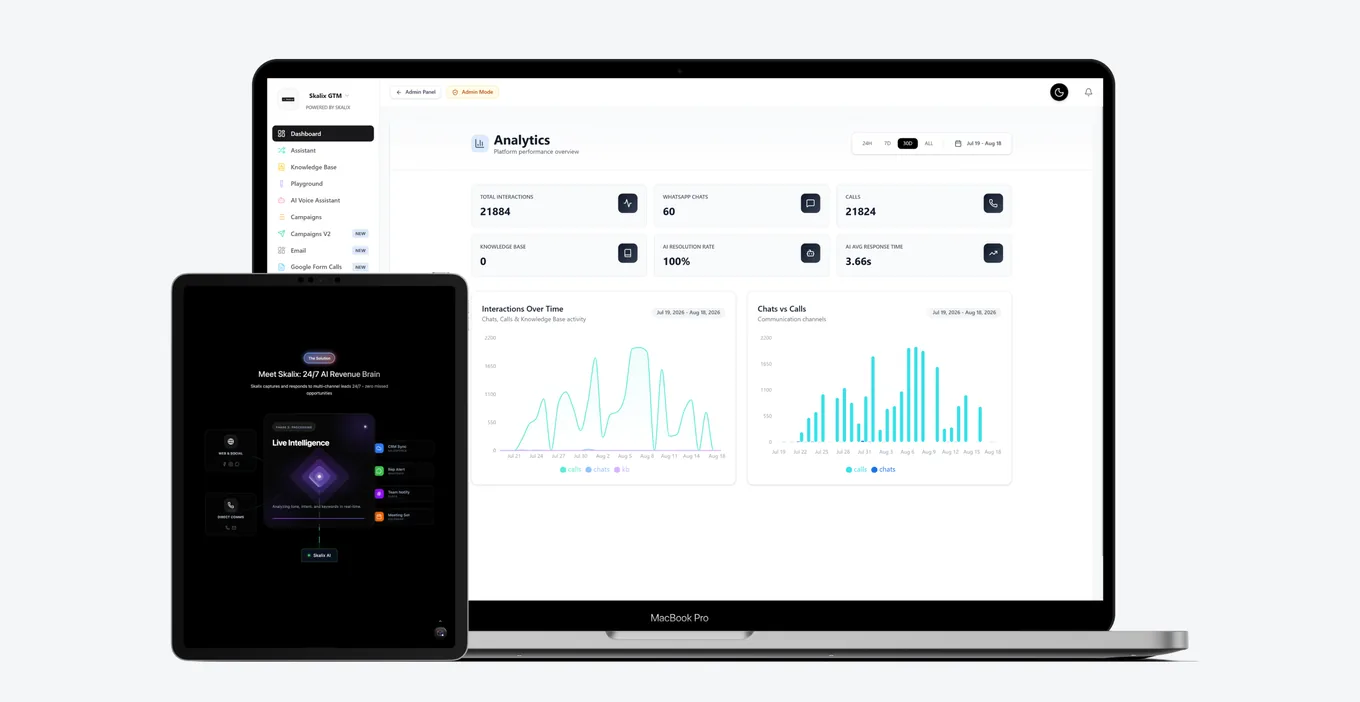
An AI-native revenue platform for calls, chat and customer follow-up.
View Skalix AI Case Study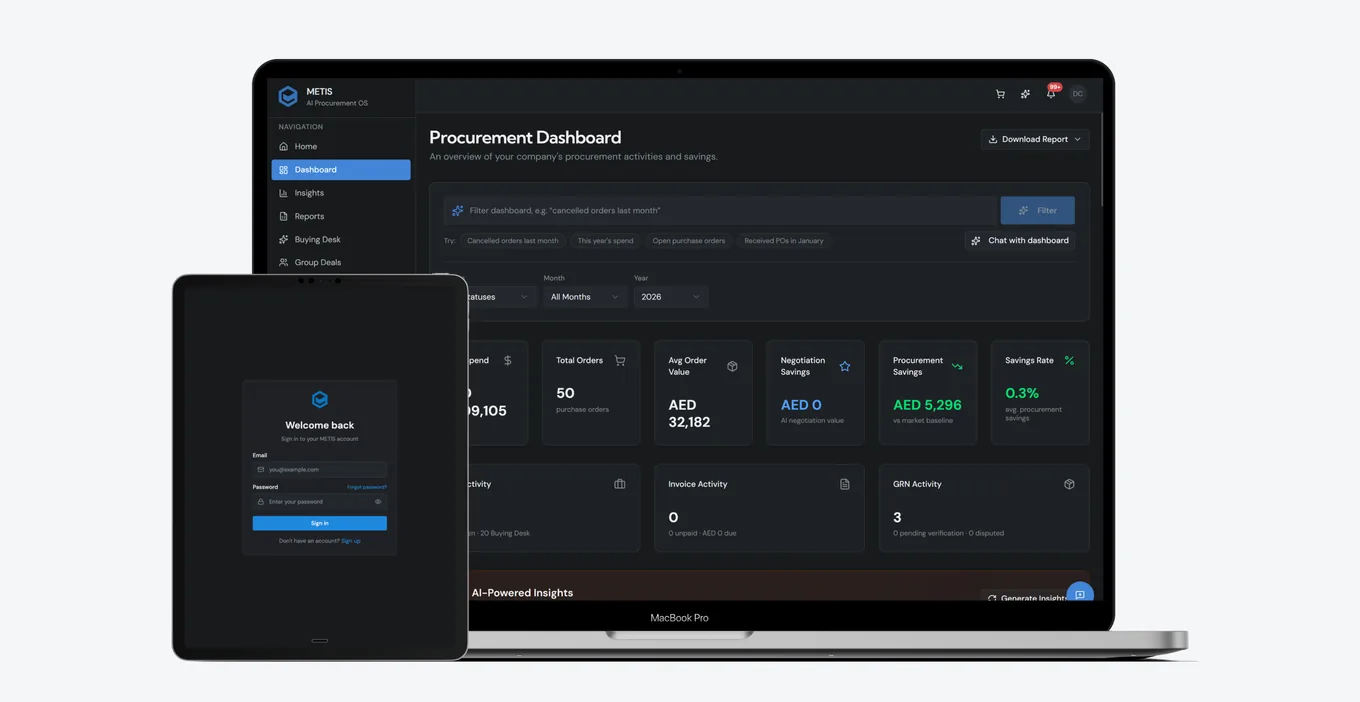
A tailored procurement platform spanning sourcing, RFQs and purchase orders.
View CollectiveSpend Case StudyMap the running workload, business-critical task, accounts and operating owner.
Agree representative traffic, failure cases, cost assumptions and acceptance evidence.
Implement the approved changes with reviewable configuration and a recovery rehearsal.
Release the agreed workload, review operational evidence and hand over the runbook.
Bring the repository, current pipeline and one release that needs improvement. We scope the checks, environment access, database compatibility and recovery rehearsal. The proposal separates pipeline implementation, migration work and support coverage; a prototype package is not the default starting point.
Only when the old application remains compatible with the current data and external effects. A code revert does not reverse database writes, sent messages or provider transactions.
No. Select the simplest deployment model that satisfies the workload and operating needs. A managed runtime or small container deployment may be sufficient.
Yes, subject to the available access, plan and agreed responsibility boundary. The release scope identifies required checks, deployment permissions and recovery ownership.
Bring the current system outline, safe examples of the failing or unproven task, relevant provider documentation and the person who owns the operating decision. Do not send passwords or production customer exports.

Scope deployment, database compatibility and recovery with Arcforth before extending the release pipeline.
Agree the first deliverable, access and operating responsibilities before implementation.